This Week in Crypto (September 28–October 5): A Senate Report Traces Iran's Money to USDT, 29,000 Jobs Price Out the October Hike, and Zano Rewinds a Month of Its Own Chain
If last week was about how money leaves an exchange, this week in crypto was about who gets to move it at all. A Senate report put USDT at the center of Iran's sanctions evasion, and Treasury went after Russia's A7 payments network three days later. The SEC proposed letting advisers self-custody crypto; community banks sued to shut the trust-charter door. Friday's payrolls priced out an October hike and sent bitcoin to $87,000. Here's the week, story by story.
The week at a glance
| Story | Date | The number that matters |
|---|---|---|
| Senate report on USDT and Iran; Treasury designates A7 | September 28 – October 1 | 84% of 846 sanctioned wallets used mostly USDT |
| Payrolls miss, October hike priced out | October 2 | +29,000 jobs; 84% odds of a hold |
| SEC custody proposal vs. ICBA lawsuit | October 1–2 | 60-day comment window; 21 trust banks challenged |
| Blast shuts down | October 2 | TVL down 98.5%, $2.2B to ~$32M |
| Zano rolls back a month | September 27–28 | Over $200M in counterfeit tokens |
Washington followed Iran's money to USDT, then to Russia's A7
On September 28, Democratic staff of the Senate Permanent Subcommittee on Investigations released a report on 846 wallets sanctioned for links to Iran and its proxies. Of those, 84% transacted exclusively or nearly exclusively in Tether's USDT. Two sanctioned oil smugglers moved more than $603 million in USDT between 2021 and 2025.
The mechanism the report describes is enforcement lag. Before 2024, it says, Tether did not consistently freeze designated wallets, and in one case $34.6 million kept moving after designation. Sen. Richard Blumenthal asked Treasury and the Justice Department to investigate. Tether answered the same day.
On X: @tether — Tether says it has supported "nearly $550 million in Iran-linked USD₮ freezes."
Tether Has Supported Nearly $550 Million in Iran-Linked USD₮ Freezes as U.S. Expands Sanctions Campaign
— Tether (@tether) September 28, 2026
Read more:https://t.co/L15BcxEjo7
On October 1, Treasury designated the A7 Network a significant transnational criminal organization. A7 is a Russia-linked payments system, built around the ruble-backed A7A5 token, that Treasury says Iran used to evade sanctions. It had declared volume of about 7.5 trillion rubles (~$91.5 billion). FinCEN also proposed cutting off transfers through A7's third-country sub-agents.
On X: @USTreasury — calls it "unprecedented action against the A7 Network, a shadow banking network."
Today, Treasury took unprecedented action against the A7 Network, a shadow banking network with ties to Russia used by the Iranian regime to evade sanctions as part of Operation Economic Outcast.
— Treasury Department (@USTreasury) October 1, 2026
Treasury’s @FinCENnews proposed a rule that would prohibit transmittals of funds…
Both actions point at the same chokepoint: issuers that can freeze tokens, and the intermediaries that settle them. Our stablecoin explainer covers why a freeze function exists in the first place.
29,000 jobs priced out the October hike, and bitcoin printed $87,000
September payrolls, out October 2, added 29,000 jobs against roughly 84,000 expected. Unemployment rose to 4.2%, and August was revised down to 133,000. CME FedWatch moved to 84% odds of a hold at the October meeting, a week after last week's yield spike had hike odds above 70%.
On X: @JustinWolfers — "weak -- but not tragic," with payrolls averaging about 17,000 a month over three months.
An all around weak -- but not tragic -- payrolls report for September.
— Justin Wolfers (@JustinWolfers) October 2, 2026
+29k jobs created, about 60k below expectations. Revisions made both July and August look weaker, too. Over the past 3 months, we've an average of a mere +17k per month. pic.twitter.com/GClNJklWtB
Rates turned with it. The 10-year Treasury fell nearly six basis points to 5.18%, and the 2-year fell to 4.73%. Bitcoin, which had held $82,500 support three times during the week, cleared a sell wall at $85,000 and topped $87,000 on Friday, 14.6% above its September 15 low. It closed Sunday near $85,200.
Temper it a little. Goldman Sachs Asset Management still sees a December hike as its base case, so the jobs report postponed the hike rather than cancelling it. ETF demand is also slowing: spot bitcoin funds took $2.65 billion in September, down from $3.52 billion in August.
The SEC widened who can hold crypto, and community banks sued to narrow it
On October 1, the SEC proposed a custody framework for registered investment advisers and funds. It would let them self-custody crypto under certain conditions and let state trust companies act as custodians. Comments run 60 days from Federal Register publication.
On X: @SECPaulSAtkins — Atkins says custody rules "have not kept pace" with a multi-trillion-dollar asset class.
Since the advent of Bitcoin in 2008, the crypto asset market has grown from a niche curiosity into a multi-trillion-dollar asset class to which investors actively seek exposure. Unfortunately, our rules and regulations have not kept pace.
— Paul Atkins (@SECPaulSAtkins) October 1, 2026
To that end, today’s proposal would… https://t.co/9C5LvRb8b5
The next day, the Independent Community Bankers of America sued the OCC in federal court in Washington. The suit targets the OCC's March 2026 chartering rule, the 2021 Interpretive Letter 1176, and Protego's charter approval.
| SEC, October 1 | ICBA v. OCC, October 2 | |
|---|---|---|
| Direction | Widens who can custody crypto | Narrows who can be a crypto "bank" |
| Instrument | Proposed rule, 60-day comment | APA lawsuit, D.D.C. |
| Target | Advisers, funds, state trust companies | Trust charters for Coinbase, Circle, Protego and others |
On X: @GivnerAriel — attorney's read of the complaint: 21 trust banks approved, 13 of them crypto firms.
🚨 Community banks just sued the OCC for letting crypto firms in through the national trust charter.
— Ariel Givner (@GivnerAriel) October 2, 2026
Filed today in D.C. The ask is to vacate the chartering rule, kill the 2021 interpretive letter it rests on, and unwind Protego’s approval.
ICBA v. OCC, 1:26-cv-03441.… pic.twitter.com/WluqEna1H7
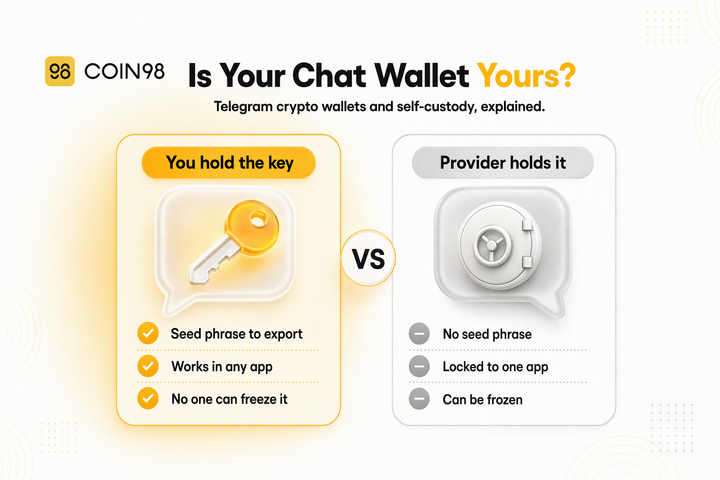
That 21-and-13 count comes from one lawyer's summary of the complaint and is worth treating as unconfirmed. The OCC declined to comment. Commissioner Hester Peirce's note on the SEC side: "many crypto owners prize being able to custody their own assets." For individuals that choice already exists, and the custodial vs. non-custodial distinction is the one both fights turn on.
Blast, once a $2.2 billion layer-2, is shutting down
On October 2, Blast said it will wind down its Ethereum layer-2 network. TVL had peaked at $2.2 billion in June 2024. It now stands at about $32 million, down 98.5%.
On X: @blast — "the ongoing costs of maintaining Blast exceed the revenue generated by the L2."
Blast will be shutting down.
— Blast (@blast) October 2, 2026
We launched Blast with the goal of building a self-sustaining chain for users and developers. Unfortunately, the economics of operating the chain no longer make sense: the ongoing costs of maintaining Blast exceed the revenue generated by the L2, and…
The arithmetic explains the rest. Blast raised $20 million from Paradigm and Standard Crypto, launched on the promise of native yield, and then had to compete with Base and Robinhood's own L2, both of which came with built-in user bases. BLAST fell 17–19% on the news.
Withdrawals pause for about a week while Blast pulls its Lido assets, then reopen with a 24-hour delay. The standard interface works until October 26. After that, funds must be claimed through the L1 bridge contracts directly. If you hold assets there, we'd suggest moving them before the deadline. Our bridge explainer covers how those exits work.
The kicker: Zano rewound a month of its own chain to erase $200 million of counterfeit coins
On August 29, an attacker used a missing check in Zano's new Gateway Addresses to mint about 18.4 million ZANO, roughly $102 million, in one transaction. Nobody noticed for nearly a month. On September 25, the attacker repeated it with ZANO and the fUSD stablecoin, and Zano's monitoring finally caught it. Counterfeit tokens totalled over $200 million.
The fix was to restart from block 3,833,000, before the hard fork that introduced the bug. That erased a month of legitimate transactions, staking rewards and mined blocks along with the fake coins. Freedom Dollar said several million dollars of its assets were exchanged for counterfeit fUSD. Zano says reimbursement will come from its dev fund and team, with no new ZANO issued. Critics say the rollback spread the losses across everyone who used the chain that month.
Also this week
- Bitget restored all withdrawals on October 2, on schedule. The attacker has been swapping ETH for BTC through THORChain, which declined Bitget's request to block the addresses. A network halt "is not a selective freeze," it said.
- Drift opened recovery claims paying just over 1% of losses. The pool holds $3.11 million against a $295.4 million April exploit, and Tether's pledge of up to $127.5 million has not yet arrived.
- Circle and the Hyperliquid Policy Center pressed the EU on October 1 to rewrite MiCA's stablecoin-reserve and perps rules, a day after ESMA published its own MiCA recommendations.
- The UK FCA opened crypto authorization applications on September 30. The window runs to February 28, 2027, and the regime starts October 25, 2027.
What to watch next
Four dates matter in the coming weeks: October 6, when Glamsterdam goes to the Sepolia testnet; October 19, CME's BCH and UNI futures; October 26, Blast's withdrawal deadline; and the October FOMC, now priced 84% for a hold. Watch too for Bitget's post-mortem and any Treasury response to the Tether report. A week like this one is a reminder to check who holds your keys. Coin98 Super Wallet generates them on-device across 100+ chains. Last week's roundup has the background on Bitget.
Last updated: October 2026