Cross-chain Bridges Explained: Moving Assets Between Blockchains
Learn how cross-chain bridges work to transfer assets between L1s & L2s. Discover SpaceGate in Coin98 Super Wallet for secure, seamless bridging.
You Have Assets on One Chain, But the Action is on Another. Now What?
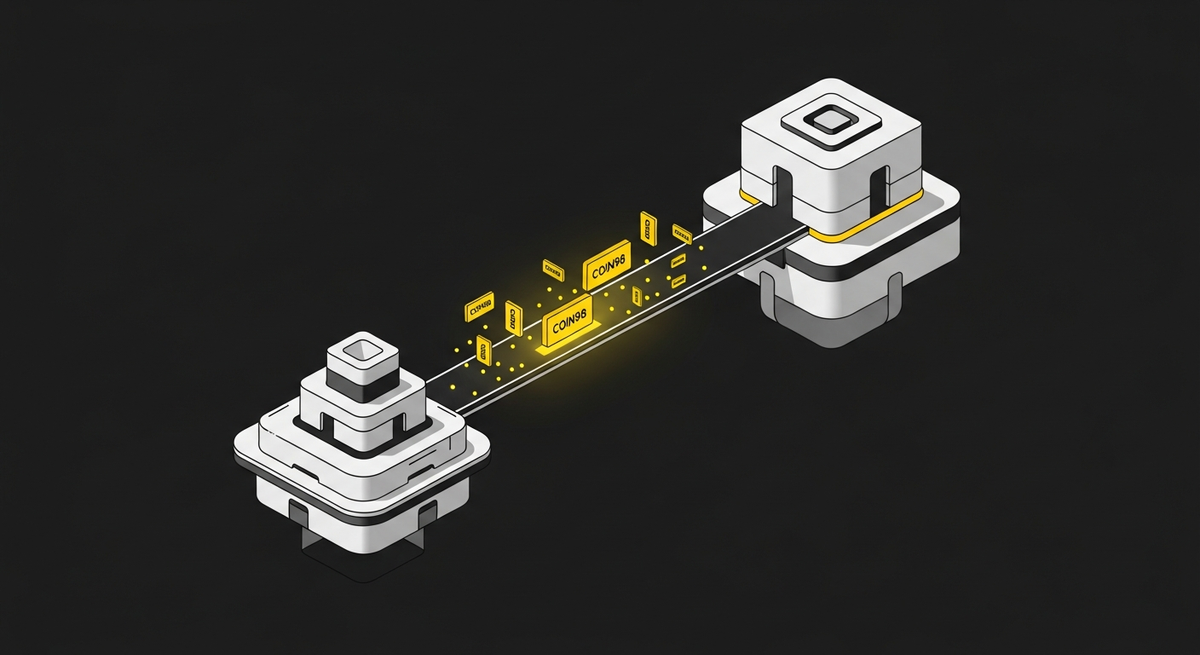
You're holding ETH on the Ethereum Mainnet, but you've just discovered a promising new DeFi protocol on Arbitrum offering incredible yields. The classic Web3 dilemma strikes: how do you move your funds from one blockchain to another without the hassle of sending them to a centralized exchange, selling, withdrawing, and buying again? The answer is a foundational piece of Web3 infrastructure: the cross-chain bridge.
Understanding bridges is no longer optional for the serious crypto user. They are the highways connecting the isolated islands of different blockchains, enabling a truly interoperable and liquid multi-chain future. Let's break down how they work and how you can navigate them safely.
What is a Cross-chain Bridge, Really?
Imagine Ethereum and Solana as two separate countries, each with its own currency and financial system. A cross-chain bridge acts like a foreign exchange and transfer service between them. It allows you to send an asset from one 'country' (the source chain) and receive a representation of it in the other (the destination chain).
The core problem they solve is interoperability. Without bridges, blockchains are siloed ecosystems, unable to communicate or share value. This fragmentation limits liquidity and creates a frustrating user experience. A bridge unlocks the ability for assets and data to flow freely between them.
It's crucial to understand that your assets don't physically move from one chain to another. Instead, a clever mechanism locks your original asset and creates a synthetic, pegged equivalent on the new chain.
The Core Mechanism: How "Lock-and-Mint" Works
Most bridges operate on a principle known as "lock-and-mint." While the specific architecture can vary, the user-facing process is generally consistent. Let's walk through an example of bridging USDC from Ethereum to Polygon.
- Step 1: Lock. You initiate a transaction to send your 100 USDC on Ethereum to the bridge's designated smart contract address.
- Step 2: Confirmation. The bridge's network of validators (or oracles) observes this transaction on the Ethereum blockchain and confirms that your 100 USDC has been successfully deposited and is now locked.
- Step 3: Mint. Once confirmed, the bridge's smart contract on the Polygon network is triggered to mint an equivalent amount of a wrapped asset—let's call it "bridge.USDC"—and sends it to your wallet address on Polygon.
You now have 100 bridge.USDC on Polygon, which is fully backed 1:1 by the original USDC locked on Ethereum. You can use this new token to interact with any DApp on Polygon. To move your funds back, the process is reversed in a "burn-and-release" mechanism: your bridge.USDC on Polygon is burned, signaling the contract on Ethereum to release your original 100 USDC.
The Bridge Dilemma: A Maze of Risk and Complexity
The concept is powerful, but the reality can be daunting. There are hundreds of bridges, each with different security models, fees, and supported chains. This creates significant challenges for users:
- Security Risks: Bridges hold enormous amounts of locked assets, making them prime targets for hackers. High-profile exploits have resulted in hundreds of millions of dollars in losses, a constant fear for any user.
- User Experience Fragmentation: Using a bridge often means leaving the familiar environment of your wallet. You have to find a reputable bridge website, connect your wallet, grant permissions to a third-party DApp, and navigate a potentially confusing interface.
- Wallet Limitations: Many popular wallets like MetaMask or Phantom offer basic bridging functionality, but it's often an aggregator that simply presents you with a list of third-party options. You're still left with the burden of choosing and trusting an external protocol, which adds another layer of risk and friction.
This fragmented approach forces you to become a security expert, vetting each bridge you use. We believe there is a better way.
The Coin98 Solution: SpaceGate, Your Native Cross-chain Gateway
At Coin98, we saw these user pain points not as features, but as flaws in the Web3 experience. That's why we built SpaceGate, a powerful cross-chain bridge, directly into the Coin98 Super Wallet. This isn't just a link to an external service; it's a deeply integrated solution designed for maximum security and simplicity.
Here’s how SpaceGate solves the bridge dilemma:
- Unmatched Security: By integrating the bridge natively, you never have to leave the secure environment of your Coin98 Super Wallet. You aren't connecting to random DApp websites and approving unknown contracts. We handle the complex routing in the backend, working with vetted and audited bridge protocols to secure your journey across chains.
- Radical Simplicity: Forget confusing interfaces. With SpaceGate, the process is streamlined into a few taps. Select your source chain, destination chain, the token, and the amount. We automatically find the most optimal route based on fees, speed, and slippage. It's a true one-stop-shop experience.
- True Multi-chain Power: While some wallets focus on a single ecosystem, the Coin98 Super Wallet is built for a multi-chain world. SpaceGate supports a vast and growing number of blockchains, from EVM chains to non-EVM networks, giving you unparalleled freedom to move your assets where they're needed most. This seamless experience is central to our vision, where your digital identity, perhaps simplified by a OneID, can traverse the entirety of Web3.
How to Use SpaceGate in 30 Seconds
Ready to experience a better way to bridge? Here's how simple it is:
- Open your Coin98 Super Wallet and go to the Swap feature.
- Select the SpaceGate (Bridge) option.
- Choose your 'From' and 'To' chains and the token you want to transfer.
- Enter the amount and review the optimized route provided.
- Confirm the transaction. That's it. Your assets are on their way.
Conclusion: Bridge with Confidence
Cross-chain bridges are no longer a niche tool for DeFi degens; they are essential for anyone participating in the modern crypto economy. While the technology is complex and the risks are real, the right tools can abstract away that complexity and mitigate the risks.
We built SpaceGate to provide a secure, efficient, and user-friendly bridging experience, empowering you to explore the multi-chain universe with confidence. Stop juggling dozens of tabs and worrying about which bridge to trust.
Download the Coin98 Super Wallet today and make your first seamless cross-chain transfer with SpaceGate.
Frequently Asked Questions (FAQ)
What is a cross-chain bridge?
A cross-chain bridge is a foundational Web3 infrastructure that allows users to move assets between different blockchains. It acts like a foreign exchange and transfer service, enabling interoperability and allowing access to decentralized applications (DApps) and protocols across various chains without needing a centralized exchange.
Why are cross-chain bridges important?
Bridges are crucial for overcoming blockchain fragmentation and enabling interoperability. They connect isolated ecosystems, allowing assets and data to flow freely. This increases liquidity, improves user experience, and facilitates a truly multi-chain future, allowing users to tap into opportunities on diverse networks.
How do cross-chain bridges work?
Most bridges operate using a "lock-and-mint" mechanism. An asset is locked on the source chain, and a smart contract on the destination chain mints an equivalent, synthetic representation of that asset. Network validators confirm the initial lock before the new token is issued, maintaining a 1:1 backing.
Do assets physically move between blockchains when using a bridge?
No, assets do not physically move. Instead, when you use a cross-chain bridge, your original asset is locked in a smart contract on the source blockchain. Subsequently, a new, equivalent, wrapped token is minted on the destination blockchain, which is fully backed by the original locked asset.