What is Viction? A beginner's guide
Viction lets dApps cover your gas fees instead of you — here is how its PoSV consensus, VRC25 standard, and VIC token actually work.
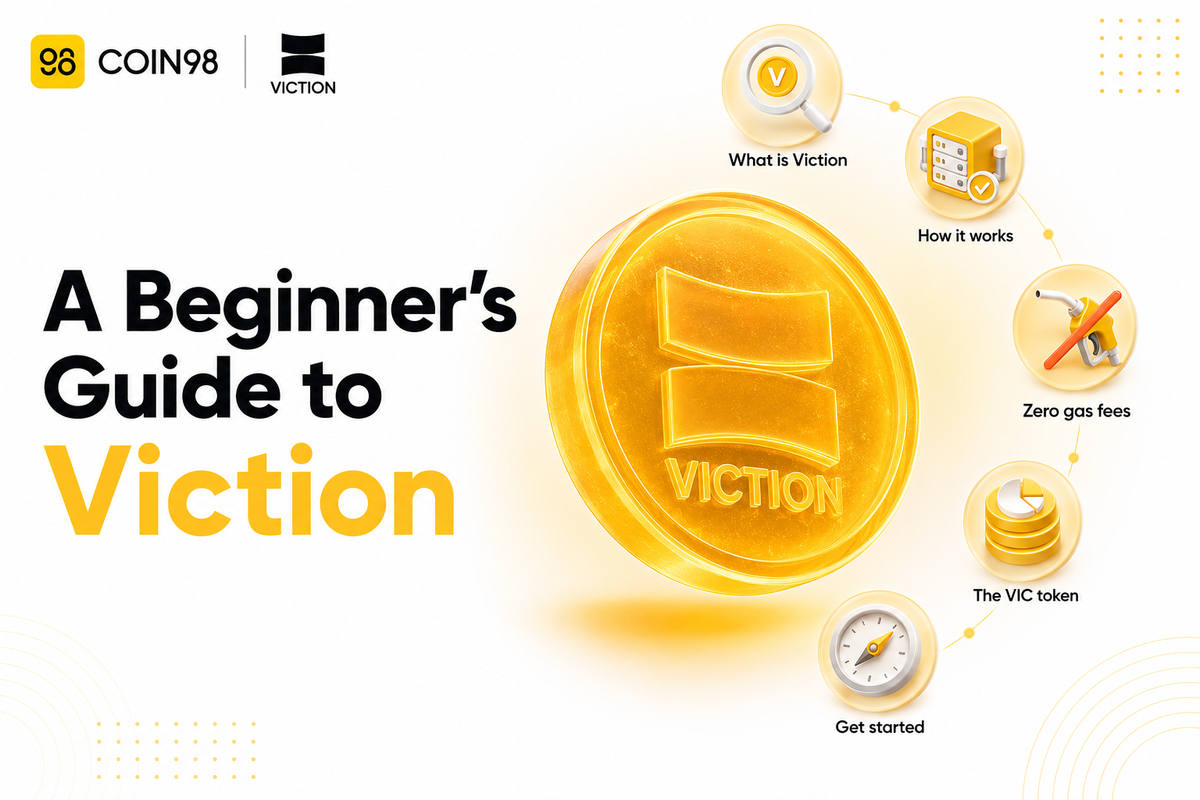
This guide covers what Viction is, how it works, what's being built on it, and how to get started holding and using VIC.
What is Viction?
Viction is a layer-1, EVM-compatible blockchain designed to make Web3 apps usable without forcing every interaction through a paid transaction. "EVM-compatible" means it runs the same kind of smart contracts as Ethereum, so developers familiar with Ethereum's tooling can deploy on Viction with minimal changes.
Viction's mainnet has been live since 2018, giving the network years of continuous operating history behind it. Coin98 has been a strategic investor in the project, supporting its infrastructure development.
How does Viction work?
Viction secures its network using Proof-of-Stake Voting (PoSV), a consensus mechanism run by 150 masternodes rather than miners. To become a masternode candidate, a token holder deposits 50,000 VIC, and the community then votes for which candidates become active masternodes, according to Viction's own documentation.
Once active, masternodes take turns producing blocks in sequence, but Viction adds a verification layer called Double Validation: every block a masternode creates must be independently checked by another, randomly selected masternode before it's added to the chain, per Viction's docs. That randomization is specifically meant to make handshaking attacks — where validators coordinate in advance to manipulate block order — harder to pull off. The result, according to Viction's documentation, is a network that handles at least 2,000 transactions per second with 2-second block times and transaction confirmation within 4 seconds.
Why are Viction's transactions advertised as "zero gas fees"?
Viction advertises zero gas fees because its VRC25 token standard allows a project's own smart contract — called a VRC25Issuer — to pay the gas on a user's behalf, rather than requiring the user to hold VIC and pay for every transaction themselves, according to Viction's official blog.
This matters for beginners because it removes one of the more confusing parts of using a new blockchain: needing to acquire a chain's native token just to make a single transaction. Under VRC25's sponsor model, a dApp deploys the VRC25Issuer contract and covers the fee itself, which Viction frames as a way to lower the barrier for newcomers moving from familiar Web2 apps into Web3, per the same blog post. Whether a given transaction actually ends up fee-free still depends on whether the specific app or contract being used has opted into that sponsorship — it's a feature individual dApps choose to enable, not an unconditional, network-wide guarantee covering every transaction.
The Viction ecosystem
VIC, the network's native token, still handles the essentials — paying standard transaction fees when a transaction isn't sponsored under VRC25, staking toward masternode candidacy, and voting on governance proposals — but for a newcomer, the more useful thing to understand is what's actually being built on top of the chain.
Viction supports the categories you'd expect from a general-purpose layer-1: DeFi, GameFi, NFTs, and payments or micropayments, running on the same ~2-second block times and sub-$0.001 fees described earlier, according to CoinMarketCap's overview of the network. Because Viction is EVM-compatible, most of these apps use the same Solidity tooling as Ethereum, which is part of why projects can move over without rebuilding from scratch.
What ties the ecosystem together is the VRC25 standard. Beyond letting apps sponsor gas (covered above), Viction extended VRC25 in 2025 to support on-chain loyalty points, giving projects a native way to reward users directly on-chain, per Viction's ecosystem updates. VRC25 assets have also begun listing on major centralized exchanges — Coin98's own C98, itself issued as a VRC25 token, was among the first VRC25 tokens supported for deposits and withdrawals on large exchanges, according to Viction's blog.
To grow that ecosystem, the Viction Foundation set aside 80 million VIC for ecosystem development in its 2024 supply expansion (approved through the community's VIP #1 proposal) and has been deploying it through 2025–2026 as grants for dApps and layer-2 projects, per Viction's community materials. Alongside the apps, Viction runs the usual supporting infrastructure — a block explorer, bridges, and public RPC endpoints — so assets and apps can move on and off the chain. The practical takeaway for a beginner: Viction isn't just a token to hold, but a small, active EVM ecosystem where the zero-gas VRC25 model is the common thread across the apps you'll actually use.
How to get started with Viction
Getting started with Viction means doing two things: getting some VIC, and setting up a wallet that can hold it and interact with Viction-based apps.
- Buy VIC on an exchange. VIC is listed on several centralized exchanges. As with most token purchases, expect to complete identity verification (KYC) before withdrawing funds to a wallet held under your own control.
- Buy directly inside a wallet app with a fiat flow. Coin98 Super Wallet, for example, has a built-in fiat purchase flow: select the token and amount, the app compares rates across integrated providers like MoonPay, complete identity verification with the provider, and the purchased token lands directly in the wallet address you control, according to Coin98's documentation — skipping a separate withdrawal step.
- Connect a wallet to the Viction network. Coin98 Super Wallet is one of the wallets Viction's own documentation lists as a supported way to connect to its network, alongside MetaMask and others, per Viction's docs.
Once connected, holding VIC in a multi-chain wallet rather than a dedicated single-chain app means the same wallet can also hold assets from other blockchains in use, under one backup.
How to store VIC safely
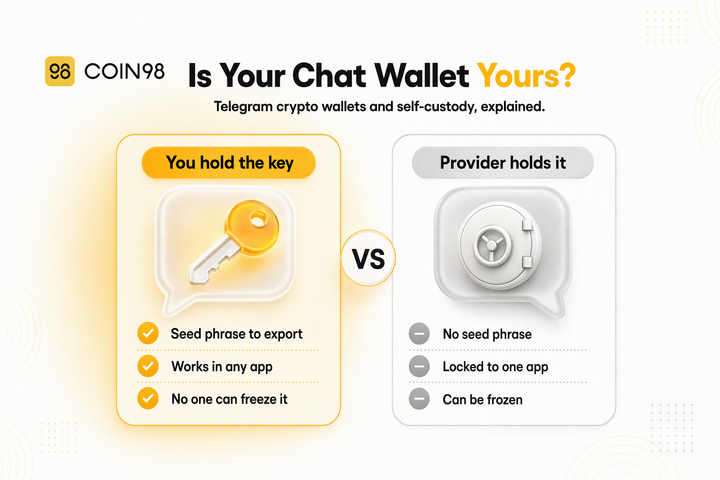
A wallet holding VIC manages the same two pieces of secret data any crypto wallet does: the private key and the seed phrase. The private key is generated from the seed phrase and functions like a password proving ownership, while the seed phrase — typically 12 to 24 plain-English words — can recreate that private key and any others tied to the same wallet, per Coin98's documentation. The seed phrase sits above the private key in this hierarchy: it can regenerate a private key, but the reverse isn't true.
Viction carries a specific import detail beginners should know about: Coin98 supports two import options — a New Standard and an Old Standard — for several blockchains, including Viction, alongside Bitcoin, Solana, and Avalanche C-chain, according to Coin98's documentation. Each standard derives a different set of addresses from the same seed phrase, so importing an existing wallet with the wrong standard selected can show a confusing zero balance instead of the funds expected — the fix is reselecting the correct standard, not a sign that funds are lost.
For day-to-day convenience, we'd suggest a multi-chain wallet over a single-purpose app for anyone holding assets across more than one network. Coin98 Super Wallet supports 100+ blockchains under one 12- or 24-word seed phrase, so the backup protecting VIC also covers any other supported chain in the same wallet, per Coin98's documentation. We'd also suggest writing the seed phrase down on paper rather than storing it digitally, and avoiding photos or cloud notes of it, since anyone who obtains those words gains the same control over the wallet as the owner.
FAQ
What is Viction in simple terms? Viction is a layer-1, EVM-compatible blockchain that uses Proof-of-Stake Voting consensus and a zero-gas-fee token standard (VRC25) to let dApps cover transaction costs for users.
Are Viction transactions really always free? Not unconditionally. Zero-gas transactions depend on a specific dApp deploying the VRC25Issuer contract to sponsor fees on a user's behalf. Transactions outside that sponsorship model still require VIC to pay standard network fees.
How is Viction different from Ethereum? Both are EVM-compatible, but Viction uses Proof-of-Stake Voting with 150 masternodes and Double Validation rather than Ethereum's validator set, and Viction's VRC25 standard lets apps sponsor user gas fees — a mechanic Ethereum doesn't have natively.
Do I need a different wallet for Viction than for other crypto? Not necessarily. A multi-chain wallet like Coin98 Super Wallet supports Viction alongside 100+ other blockchains under one seed phrase, which is simpler than running a separate app just for VIC.
The bottom line
Viction combines an EVM-compatible, masternode-secured blockchain with a token standard that lets developers — not users — pick up the gas bill for many transactions. With an active EVM ecosystem spanning DeFi, NFTs, and payments tied together by the zero-gas VRC25 standard, and a network history stretching back to its December 2018 mainnet launch, it's a more established project than a quick glance might suggest. Coin98 Super Wallet's multi-chain support allows buying VIC directly with a built-in fiat flow and connecting to the Viction network alongside 100+ other blockchains under the same seed phrase. Explore Coin98 Super Wallet to get started.
Last updated: June 2026