What Is a Wallet Health Score?
A wallet health score is a 0–100 read on how exposed your wallet is. Here's what it measures, how it's calculated, and how to raise yours.
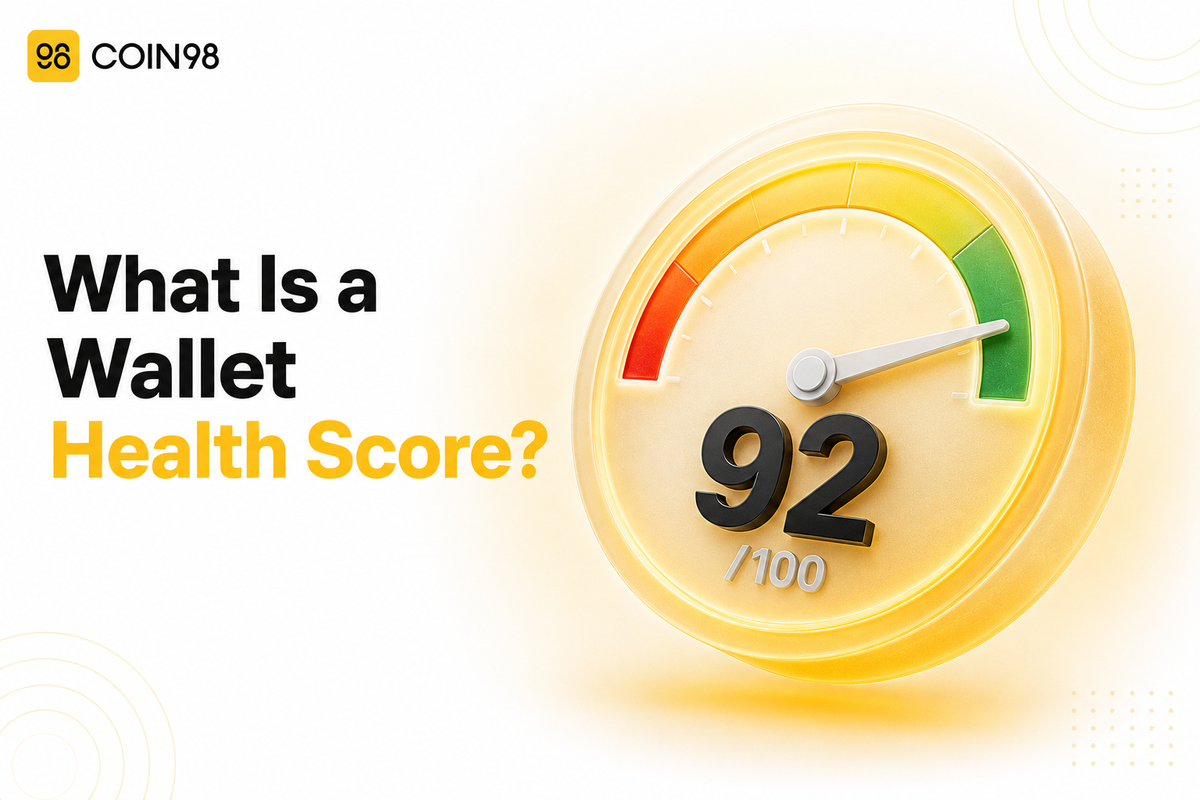
A wallet health score is a single number that sums up how exposed your crypto wallet is to theft and mistakes — think of it as a credit score, but for wallet safety instead of borrowing. Instead of asking you to interpret raw approval data and connection lists yourself, it condenses everything into one figure you can read at a glance. In Coin98 Super Wallet, that figure runs from 0 to 100, and it exists because wallet risk is otherwise invisible: in 2025, drainer phishing still cost roughly 106,000 people $83.85 million, according to Scam Sniffer, mostly through permissions owners had forgotten. This guide explains what the score measures, how it's calculated, and how to read yours.
The short definition
A wallet health score is a risk rating for your wallet, expressed as a number, where higher is safer.
It works like a credit score in one important way — it turns a pile of messy underlying data into one comparable figure — but it measures something different. A credit score estimates how likely you are to repay debt; a wallet health score estimates how exposed your wallet is to being drained or misused right now. It's not an industry-standard number the way a FICO score is; it's a feature that security-focused wallets compute from your on-chain activity and settings.
How the score is calculated
Your score is derived from the risks found across your wallet, not from your balance or how much you trade. According to our documentation, Coin98 Wallet Health scans eight categories and lowers your score for the problems it finds in them:
| Score input | What raises risk (lowers score) |
|---|---|
| Approvals | Unrevoked token/NFT permissions still active on-chain |
| Connections | Links to phishing or fake dApps |
| Contacts | Suspicious or lookalike saved addresses |
| Interacted URLs | Risky sites opened in the dApp browser |
| Favorite dApps / Tokens | Flagged apps or tokens you've bookmarked |
| Cloud Backup | No backup in place (a recovery risk) |
Notice what's not on the list: the size of your portfolio, the number of tokens you hold, or your trading volume don't move the score. It's a measure of exposure, not wealth. The heaviest factor is usually unrevoked approvals, because — as our docs note — "dApp and token approvals do not expire automatically," so each one you never revoke is a standing risk the score keeps counting.
Reading the number: the three bands
Coin98 groups the 0–100 scale into three color bands so you know what to do without interpreting the exact figure.
| Score | Band | What it means |
|---|---|---|
| 🔴 0–30 | High risk | Resolve immediately — active exposure likely |
| 🟠 31–90 | Medium risk | Worth reviewing and cleaning up |
| 🟢 91–100 | Good standing | Low exposure; keep it up with periodic checks |
A low score doesn't mean you've already been hacked — it means the door is open, not that someone has walked through it. And a high score isn't a permanent state: every new approval you sign or dApp you connect can pull it back down, which is why the number is most useful re-checked after you use new apps rather than treated as a one-time grade.
Why a single number is useful
The value of a health score is speed: it turns "am I safe?" from a research project into a glance. Most people won't manually audit every approval across every chain each month, so the practical result is that risky permissions pile up unnoticed. A single, color-coded number lowers that effort to near zero — you open the wallet, see the band, and act only if you need to. That reduction in friction is the whole point, because the tool you check often beats the thorough audit you keep postponing.
How to raise a low score
Improving your score means clearing the specific risks the scan flags — and Wallet Health lets you fix each one in the same screen. The most common moves:
- Revoke unused approvals — the biggest lever; revoking risky permissions directly cuts your largest exposure.
- Disconnect risky dApps — cut connections to sites you no longer trust.
- Remove suspicious contacts — clear lookalike or flagged addresses.
- Enable cloud backup — closes the recovery gap.
One thing to expect: revoking an approval is an on-chain transaction, so it costs a small gas fee on the relevant network. Revoking doesn't touch your balances — it only cancels a contract's permission to move your tokens, so your assets stay put while your score climbs.
Is the score trustworthy — and is it a guarantee?
Computing your score is safe: the scan reads on-chain permission data and your wallet settings, and it never needs your seed phrase or private key. Coin98 stays non-custodial throughout — scoring your wallet doesn't give anyone the ability to move your funds.
But a score is a signal, not a shield. A green 91–100 means low known exposure at that moment; it can't promise a brand-new scam won't appear tomorrow, and it doesn't replace careful signing habits. Treat the score as a fast early-warning system that works best alongside the basics: verify every signature request, keep your seed phrase offline, and re-check after using new apps.
FAQ
Is a wallet health score the same as a credit score? Not exactly. Both compress complex data into one comparable number, but a credit score predicts repayment risk, while a wallet health score measures how exposed your wallet is to theft and mistakes. It's a wallet-security feature, not a standardized financial rating.
What lowers my wallet health score? Risks found during the scan lower it — chiefly unrevoked token approvals, plus risky dApp connections, suspicious saved contacts, risky interacted URLs, flagged favorites, and a missing backup. Your balance and trading volume don't affect it.
Does a score of 100 mean I'm completely safe? No. A top score means low known exposure at that moment, not permanent immunity. New approvals and connections can lower it again, so it's most meaningful when re-checked after you interact with new apps.
Does checking my score need my seed phrase or private key? No. The scan only reads on-chain permission data and wallet settings — it never asks for your seed phrase or private key, and Coin98 remains non-custodial.
Does improving my score cost money? Checking your score is free. Some fixes — like revoking an approval — are on-chain transactions that cost a small gas fee, but they don't touch your token balances.
The bottom line
A wallet health score is a plain-language read on wallet risk: one number, from 0 to 100, that reflects the approvals, connections, contacts, and backup status a scan finds — with higher meaning safer. It won't replace good habits, but it turns invisible exposure into something you can see and fix in minutes. Check your Wallet Health score in Coin98 Super Wallet to see where your wallet stands today.
Last updated: July 2026