Staking vs. Yield Farming vs. Liquidity Mining: A Guide
Confused by Staking, Yield Farming, and Liquidity Mining? Learn the key differences, risks, and how to choose the right DeFi strategy for your goals.
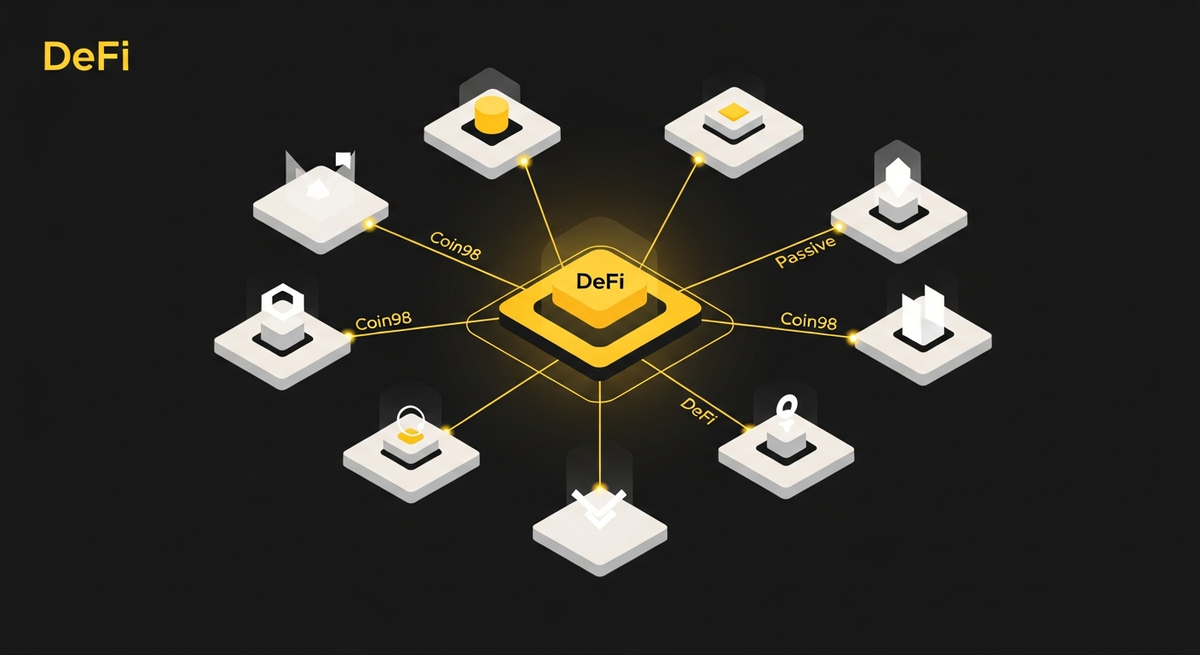
Forget the hype. Not all passive income in DeFi is created equal. While Staking, Yield Farming, and Liquidity Mining are often used interchangeably, they represent vastly different levels of risk and complexity. Understanding these differences is crucial to protect your capital. We'll break down which path suits your risk appetite, from a builder's perspective.
Staking: The Foundation of Passive Income (Lowest Risk)
At its core, staking is the act of locking up your crypto assets to help secure and validate transactions on a Proof-of-Stake (PoS) blockchain. Think of it as earning interest on a savings account; in return for your contribution to the network's security, you receive rewards, typically in the form of the network's native token.
This is the most straightforward entry point into DeFi passive income. The mechanism is simple, and the risks are relatively contained.
Key Characteristics of Staking:
- Purpose: Network security and consensus.
- Complexity: Low. You delegate your tokens to a validator.
- Potential Return: Moderate and relatively stable APY (Annual Percentage Yield).
What are the risks of staking?
While safer, staking isn't risk-free. The main risks of staking include:
- Market Volatility: The value of your staked tokens can decrease, potentially outweighing the rewards you earn.
- Lock-up Periods: Many protocols require you to lock your assets for a specific period, during which you cannot sell them, even in a market downturn.
- Slashing: If the validator you delegate to acts maliciously or has significant downtime, a portion of your staked assets (and the validator's) can be 'slashed' or forfeited as a penalty.
For a secure and simplified experience, you can explore various staking options directly within the Coin98 Super Wallet, which helps you connect to trusted validators across multiple chains.
Liquidity Mining: Providing the Lifeblood of DeFi (Medium Risk)
Moving up the risk ladder, we find liquidity mining. This involves providing your assets to a liquidity pool on a Decentralized Exchange (DEX). These pools, typically consisting of two assets in a pair (e.g., ETH/USDC), are what enable other users to trade without a traditional order book.
In return for providing liquidity, you receive Liquidity Provider (LP) tokens, which represent your share of the pool. You earn a portion of the trading fees generated by that pool.
Key Characteristics of Liquidity Mining:
- Purpose: To enable decentralized trading on DEXs.
- Complexity: Medium. Requires understanding of liquidity pools and LP tokens.
- Potential Return: Can be higher than staking, as it includes trading fees.
The Main Risk: Impermanent Loss
The single biggest risk unique to liquidity mining is Impermanent Loss (IL). This occurs when the price ratio of the two assets you deposited into the pool changes. The more the prices diverge, the greater the impermanent loss. It's 'impermanent' because if the prices return to their original ratio, the loss disappears. However, if you withdraw your funds while this divergence exists, the loss becomes permanent. You might have been better off just holding the original assets in your wallet.
Yield Farming: The High-Stakes Game (Highest Risk)
Now we arrive at the most complex and riskiest strategy: yield farming. So, what is yield farming? It's an aggressive strategy that seeks to maximize returns by leveraging various DeFi protocols. It often begins with liquidity mining, but it doesn't stop there.
A typical yield farming strategy looks like this:
- You provide liquidity to a pool (liquidity mining) and receive LP tokens.
- You then take those LP tokens and stake them in another protocol (a 'farm') to earn an additional reward token.
- Advanced farmers might even use those reward tokens as collateral to borrow other assets and repeat the process, creating complex, leveraged positions.
This is the essence of how to farm crypto—it’s about constantly moving capital to chase the highest yields.
The Compounded Risks of Yield Farming:
Yield farming inherits all the risks of liquidity mining (like impermanent loss) and adds several more layers:
- Smart Contract Risk: You are interacting with multiple protocols, sometimes new and unaudited ones. A bug or exploit in any one of them can lead to a total loss of funds.
- Rug Pulls: Anonymous teams can launch a farm with tempting APYs, only to drain all the liquidity and disappear.
- Complexity & High Gas Fees: Managing these strategies requires constant attention and numerous transactions, which can incur significant gas fees, eating into your profits.
A Clear Comparison: Staking vs. Yield Farming vs. Liquidity Mining
- Risk Level: Staking (Low) < Liquidity Mining (Medium) < Yield Farming (High)
- Complexity: Staking (Simple) < Liquidity Mining (Moderate) < Yield Farming (Complex)
- Potential Return: Staking (Lower) < Liquidity Mining (Medium) < Yield Farming (Highest)
- Primary Risk: Market Volatility (Staking) vs. Impermanent Loss (Liquidity Mining) vs. Compounded Risks (Yield Farming).
How to Choose Your Strategy: A Builder's Approach
Your choice should depend entirely on your risk tolerance, capital, and how actively you want to manage your portfolio.
- For Beginners: Start with Staking. It's the most reliable way to earn passive income and understand how on-chain rewards work without exposing yourself to complex risks.
- For Intermediates: If you are comfortable with the concept of impermanent loss, you can explore Liquidity Mining on well-established DEXs for asset pairs you are bullish on long-term.
- For Experts: Yield Farming is for active, experienced users who can analyze smart contracts, manage risk, and afford potential losses. It is not a 'set and forget' strategy.
Conclusion: Start Smart, Start Safe with Coin98
DeFi offers powerful tools for generating wealth, but it's crucial to navigate the landscape with a clear understanding of the risks involved. Chasing astronomical APYs without due diligence is a recipe for disaster.
We encourage you to build your DeFi knowledge step-by-step. Start with the safest options and gradually explore more complex strategies as your confidence and expertise grow. The entire DeFi world is accessible through our DApp Browser, but your security comes first.
Download the Coin98 Super Wallet today to explore secure staking opportunities and begin your passive income journey the right way.
Frequently Asked Questions (FAQ)
What is the main risk of staking crypto?
The primary risks are market volatility affecting your staked asset's price, slashing penalties for validator misbehavior, and temporary lock-up periods where you cannot sell your tokens.
Is yield farming profitable?
Yield farming can be highly profitable due to high APYs and rewards, but it also carries the highest risk, including impermanent loss, smart contract failure, and high transaction fees.
What is the difference between yield farming and liquidity mining?
Liquidity mining is simply providing assets to a liquidity pool to earn fees. Yield farming is a broader strategy that often uses the LP tokens from liquidity mining to generate further yield in other protocols.