Perpetual DEX Guide: On-Chain Leverage & Funding Rates
Explore Perpetual DEXs like GMX & Hyperliquid. Learn how crypto funding rates work and why on-chain leverage trading from your wallet is a game-changer.
Many traders still feel the sting from events like the FTX collapse, a harsh reminder of the risks of centralized custody. What if you could access leverage without ever handing over your assets to a third party? Perpetual DEXs are the answer, and they represent a fundamental shift in how we approach on-chain trading.
What is a Perpetual DEX (Perp DEX)?
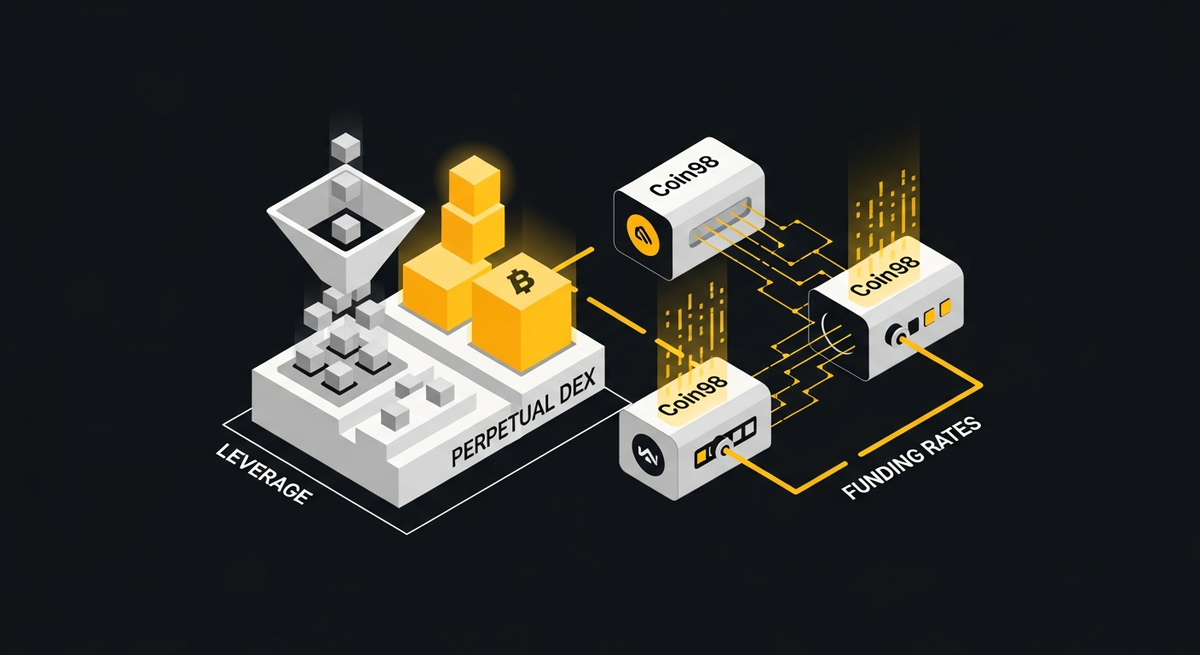
A Perpetual Decentralized Exchange (Perp DEX) is an on-chain platform for trading perpetual futures contracts. Unlike traditional futures that have an expiry date, perpetuals don't. This allows traders to hold leveraged long or short positions indefinitely, as long as they maintain sufficient collateral to avoid liquidation.
Platforms like GMX and Hyperliquid have become household names in this space. They operate on-chain, meaning every trade is settled via smart contracts on a public blockchain. This creates a transparent and permissionless environment where you trade directly from your non-custodial wallet, like the Coin98 Super Wallet. The core appeal is simple: you maintain full control over your funds at all times.
The Engine of Balance: Understanding the Crypto Funding Rate
If perpetual contracts never expire, what keeps their price from drifting far away from the actual market price (spot price) of the asset? The answer is the funding rate.
The funding rate is not a fee you pay to the exchange. Instead, it's a mechanism that forces convergence between the perpetual price and the spot price through periodic payments exchanged between traders. Here’s how it works:
- Positive Funding Rate: This occurs when the perpetual contract price is trading higher than the spot price, indicating bullish sentiment (more buyers than sellers). To balance this, traders holding long positions pay a small fee to traders holding short positions. This incentivizes opening new shorts or closing existing longs, pushing the price back down towards the spot price.
- Negative Funding Rate: This happens when the perpetual price is below the spot price, indicating bearish sentiment. To counter this, traders holding short positions pay a fee to those holding long positions. This encourages traders to go long, helping the price recover towards the spot price.
For a leverage trader, the funding rate is a critical factor. It can either be a small cost for holding a position or an additional source of profit, depending on which side of the trade you're on and the prevailing market sentiment.
Why Trade on a Perp DEX Instead of a CEX?
While centralized exchanges (CEXs) offer a familiar experience, the core risks remain. Perp DEXs offer a compelling alternative built on the foundational principles of Web3.
1. True Self-Custody: Your Keys, Your Crypto
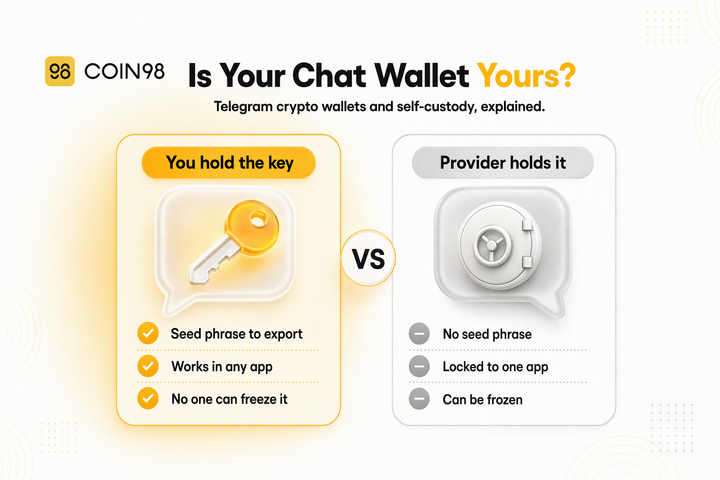
This is the most significant advantage. When you deposit funds onto a CEX, you are giving up custody. The exchange holds your private keys, and you are trusting them not to be hacked, mismanaged, or go insolvent. On a Perp DEX, you execute every long short onchain trade directly from your Coin98 Super Wallet. Your assets never leave your control until a trade is executed by the smart contract.
2. Unmatched Transparency
Every trade, liquidation, and fee payment on a Perp DEX is a transaction recorded on the blockchain. Anyone can verify this data. This eliminates the possibility of opaque practices like unfair liquidations or manipulated server "downtimes" during high volatility, issues that have plagued traders on centralized platforms.
3. Permissionless and Global Access
Most Perp DEXs are accessible to anyone with an internet connection and a crypto wallet. This removes geographical barriers and the often lengthy KYC (Know Your Customer) processes required by CEXs, offering a truly open financial system.
The Smartest Way to Trade: Coin98 Perps
Navigating the world of Perp DEXs can feel fragmented. You have to connect your wallet to multiple sites, manage collateral on different chains, and track positions across various interfaces. This is precisely the problem we solved with Coin98 Perps.
Inside the Coin98 Super Wallet, we've integrated leading perpetual protocols into a single, seamless interface. Instead of you having to go to the dApp, we bring the dApp to you. This offers several distinct advantages:
- Unified Experience: Access top-tier liquidity from protocols like GMX and Hyperliquid without ever leaving your wallet. Compare funding rates and open positions from one secure hub.
- Peak Security: By interacting through the native Coin98 interface, you are shielded from potential phishing attacks or malicious contract interactions that can occur when connecting to unfamiliar websites.
- Effortless Management: Swap assets, bridge funds, and manage your perpetual positions alongside your spot holdings. It’s the all-in-one command center for the serious DeFi trader.
Conclusion: Take Control of Your Leverage Trading
Perpetual DEXs are more than just a trend; they are the evolution of derivatives trading, placing power, security, and transparency back into the hands of the user. By understanding mechanisms like the funding rate and leveraging secure gateways like the Coin98 Super Wallet, you can engage with on-chain leverage more safely and efficiently than ever before.
Ready to experience the future of on-chain trading? Download the Coin98 Super Wallet, navigate to the Perps tab, and take full control of your trading strategy today.
Frequently Asked Questions (FAQ)
What is a Perpetual DEX?
A decentralized exchange that allows users to trade perpetual futures contracts directly from their crypto wallets, offering leverage without an expiration date.
What is the funding rate in crypto?
A periodic payment made between long and short traders to keep the perpetual contract price aligned with the asset's spot price. It is not a fee paid to the exchange.
Is trading on a Perp DEX safer than a CEX?
It can be safer regarding custody risk, as you control your own keys. You are not exposed to the exchange going bankrupt. However, you are still exposed to smart contract risks.