What is a Smart Contract? The Code That Powers DeFi
Understand smart contracts, the automated engines of DeFi. Learn how they work, the risks involved, and how to interact with them safely using the right tools.
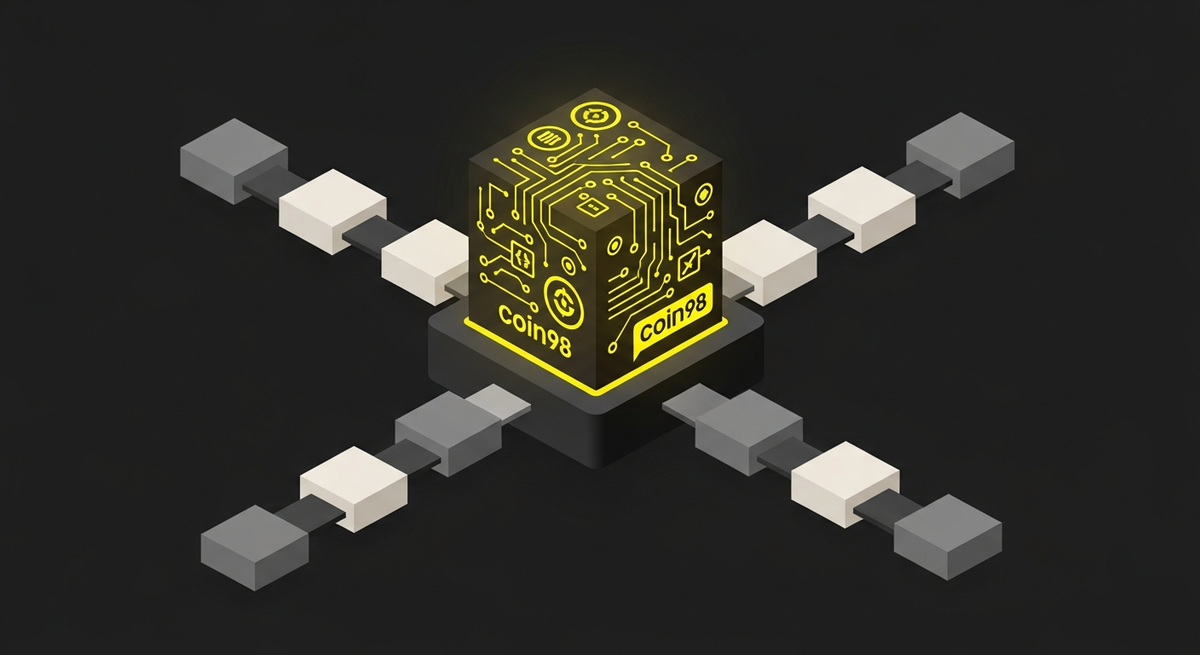
Imagine sending money to a business partner overseas. You'd typically rely on banks, lawyers, and contracts, a process that is slow, expensive, and requires trusting multiple intermediaries. Now, what if you could create an agreement that executes itself automatically and verifiably when certain conditions are met, with no middleman required? That's the core promise of a smart contract.
These are not legal documents in the traditional sense. They are the fundamental building blocks of decentralized finance (DeFi), acting as the autonomous, incorruptible engines that power everything from lending protocols to decentralized exchanges.
So, What Exactly is a Smart Contract?
At its heart, a smart contract is simply a program stored on a blockchain. It's a piece of code that runs exactly as programmed without any possibility of downtime, censorship, fraud, or third-party interference. The logic is straightforward, often following an "If-This-Then-That" (IFTTT) structure.
Let's break it down with a DeFi example:
- IF you deposit 1 ETH as collateral into a lending protocol's smart contract,
- THEN the contract automatically allows you to borrow a corresponding amount of a stablecoin like USDC.
- IF you repay the USDC loan plus the agreed-upon interest,
- THEN the contract automatically releases your 1 ETH back to your wallet.
The entire process is governed by code. The contract holds the assets in escrow and executes the terms without needing a bank or loan officer. This automation is what makes DeFi so powerful and efficient.
Key Characteristics of Smart Contracts:
- Deterministic: They produce the same output for a given input every time.
- Immutable: Once deployed on the blockchain, the code of a smart contract cannot be changed. This ensures the rules of the game are fixed.
- Transparent: Anyone can view the code and transaction history of a smart contract on a public blockchain, promoting accountability.
How Smart Contracts Are Reshaping Finance
Smart contracts are the source of innovation in Web3. They are often called "money legos" because developers can combine different contracts to create entirely new and complex financial products, a concept known as composability.
The Engines of DeFi Applications (DApps)
Virtually every DApp you interact with is powered by a set of smart contracts:
- Decentralized Exchanges (DEXs): Platforms like Uniswap and PancakeSwap use smart contracts to manage liquidity pools. When you swap tokens, you're not trading with a company; you're interacting with a contract that automatically calculates the exchange rate based on the token ratio in the pool. The Coin98 Exchange takes this a step further by aggregating liquidity from multiple DEXs, ensuring you always get the best rate and lowest slippage without having to check each platform manually.
- Lending & Borrowing Protocols: Aave and Compound use smart contracts to allow users to lend their assets to earn interest or borrow against collateral in a completely permissionless way.
- Automated Asset Management: Protocols like Yearn Finance use complex smart contracts (called Vaults) to automatically move users' funds between different lending protocols to maximize yield.
The Hidden Dangers: Smart Contract Risks You Can't Ignore
While powerful, interacting with smart contracts carries significant risks. The immutability of the blockchain is a double-edged sword: if there's a flaw in the code, it can be exploited, and the losses are often irreversible.
1. Bugs and Vulnerabilities
Code is written by humans, and humans make mistakes. A single bug in a smart contract's logic can be exploited by hackers to drain funds. The infamous DAO hack in 2016, which led to the split of Ethereum, is a stark reminder of this risk.
2. Malicious Contracts & Scams
Scammers can deploy contracts specifically designed to steal your funds. A common tactic is the "honeypot," where a contract appears to offer a high-yield opportunity, but its code only allows the creator to withdraw funds, trapping everyone else's assets.
3. The Token Approval Problem
When you use a DApp, it often asks for permission to spend tokens from your wallet. This is called a token approval. Many users, in a hurry, grant unlimited approval. This is like signing a blank check. If that DApp's smart contract is ever exploited, the attacker can use that unlimited approval to drain all of that specific token from your wallet.
Your Pre-Flight Checklist: How to Interact Safely
Protecting yourself isn't about avoiding smart contracts; it's about using the right tools and developing safe habits. Your wallet is your first and most important line of defense.
Many standard wallets, like MetaMask, will show you a long, cryptic contract address when you're about to sign a transaction. For most users, this provides very little useful information and makes it easy to approve a malicious request.
This is where we built the Coin98 Super Wallet differently. We believe security should be clear and intuitive.
Step 1: Simulate Before You Sign
Never sign a transaction blindly. Before you commit your assets, you need to know exactly what the outcome will be. The Coin98 Super Wallet includes a powerful Transaction Simulation feature. It provides a clear, human-readable summary of the transaction's outcome:
- What assets will leave your wallet.
- What assets you will receive in return.
- Any warnings about interacting with known malicious addresses.
This preview acts as a critical failsafe, allowing you to catch a potentially draining transaction *before* it happens.
Step 2: Verify the Contract
Don't just trust the DApp's front-end website. Always do a quick check on a block explorer like Etherscan (for Ethereum) or Solscan (for Solana). Look for a green checkmark indicating the source code is verified, and check if the project has been audited by a reputable security firm.
Step 3: Manage Your Approvals
Make it a habit to periodically review and revoke token approvals you no longer need. Use tools like Revoke.cash to see which DApps have spending access to your funds and remove them with a few clicks.
Conclusion: Build with Confidence
Smart contracts are the bedrock of an open, automated, and accessible financial system. They are removing barriers and creating opportunities that were previously unimaginable. However, this new frontier demands a higher level of personal responsibility and better tools.
By understanding the risks and using a wallet designed for clarity and security, you can navigate the world of DeFi with confidence. Stop guessing what a transaction will do. It's time to demand more from your wallet.
Ready to interact with Web3 the smart way? Download the Coin98 Super Wallet and experience the peace of mind that comes with transaction simulation.
Frequently Asked Questions (FAQ)
What exactly is a smart contract?
A smart contract is a program stored on a blockchain that automatically executes agreements when predefined conditions are met. It functions like an "If-This-Then-That" instruction, removing the need for intermediaries and ensuring verifiable, tamper-proof execution without downtime or censorship.
How do smart contracts function in practice?
Smart contracts operate on "If-This-Then-That" logic. For instance, if you deposit collateral into a lending protocol's smart contract, it automatically allows borrowing. Repaying the loan then automatically releases your collateral. This process is entirely governed by code, ensuring automated and trustless transactions in DeFi.
What are the main characteristics of smart contracts?
Smart contracts are primarily deterministic, meaning they produce consistent outputs for given inputs. They are also immutable, so their code cannot be altered once deployed on the blockchain, guaranteeing fixed rules. Furthermore, they are transparent, with their code and transaction history publicly viewable.
How do smart contracts power Decentralized Finance (DeFi)?
Smart contracts are the fundamental building blocks and autonomous engines of DeFi. They enable self-executing financial agreements like lending, borrowing, and token swaps without intermediaries. Their composability allows developers to combine them, creating complex DApps and new financial products, driving innovation in Web3.