Gas Fees & Internal Transactions: Fixing Stuck Crypto Txs
Learn why crypto transactions get stuck or fail. We explain internal transactions, multi-chain gas fees (ETH, SOL, BSC), and how Coin98 solves these issues.
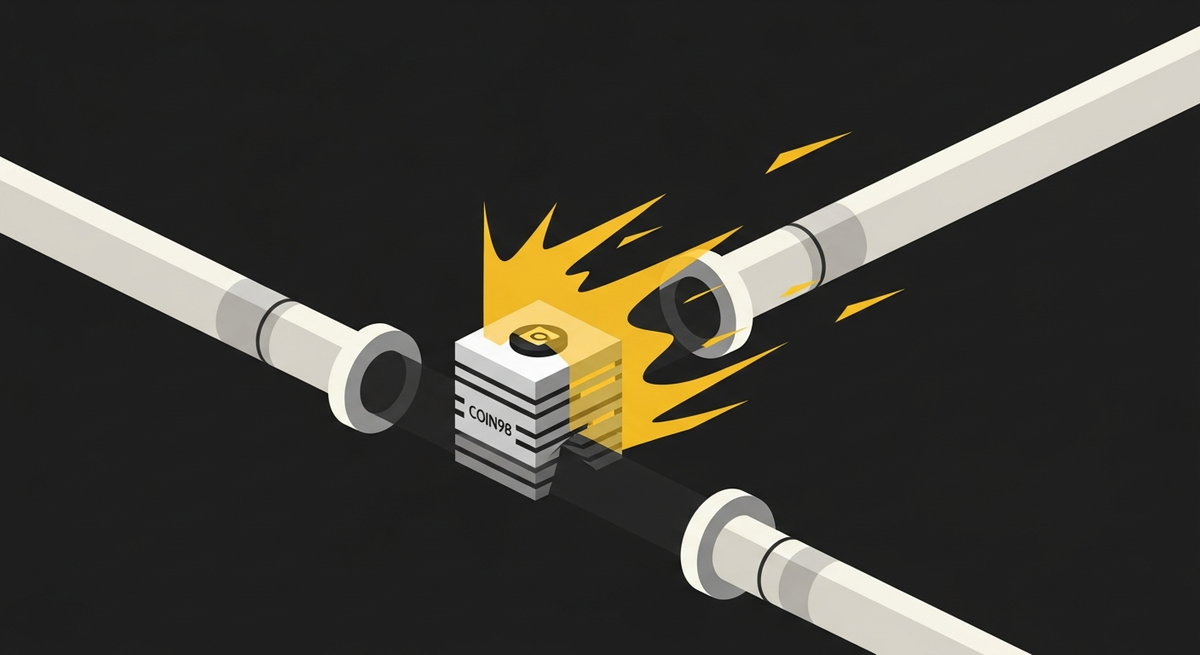
You click 'Swap' on a decentralized exchange, approve the prompt, and wait. Ten minutes later, the transaction fails, but your wallet balance still took a hit from the network fee. This is a common, costly frustration for anyone exploring Web3. If you do not understand how blockchains process data behind the scenes, you will continue bleeding funds to failed interactions.
To navigate DeFi efficiently, you need a firm grasp of two critical concepts: Internal Transactions and Gas Fees. In this guide, we break down the mechanics of network fees across major chains like Ethereum (ETH), BNB Smart Chain (BSC), and Solana (SOL), dissect why transactions get stuck, and show you how to prevent it.
The Anatomy of a Transaction: Standard vs. Internal
When you look at a blockchain explorer, you might notice that some of your interactions do not show up in the main transaction history. This discrepancy comes down to the difference between standard and internal transactions.
Standard Transactions
A standard transaction occurs between two Externally Owned Accounts (EOAs)—meaning user wallets. If you send 1 ETH from your wallet directly to a friend's wallet, this is a standard transaction. It requires a predictable, baseline amount of computational effort (specifically 21,000 gas on Ethereum).
Internal Transactions
Internal Transactions occur when a smart contract interacts with another smart contract. For example, when you provide Liquidity to a pool or execute a multi-hop swap on a DEX, your wallet interacts with a router contract, which then triggers a series of internal transfers to execute your trade.
These are not technically actual transactions on the base layer; they are state changes triggered by a parent transaction. Because they involve complex logic, they require a much higher and highly variable Gas Limit. If your wallet underestimates the computational power needed for these internal hops, the transaction will run "Out of Gas" and fail.
Decoding Multi-Chain Gas Fees: ETH, BSC, and SOL
Every blockchain has its own economic model for processing data. Understanding these differences is crucial for avoiding overpayment and failed transactions.
Ethereum (ETH): The Premium Network
Ethereum utilizes a fee mechanism introduced by EIP-1559. Your total fee consists of a Base Fee (which is burned to manage supply) and a Priority Fee (a tip paid to validators to include your transaction faster). Because Ethereum prioritizes decentralization and security over sheer throughput, network congestion heavily impacts the Base Fee. During a high-profile NFT mint or volatile market swings, fees can spike unpredictably, leaving underpriced transactions stuck in the mempool.
BNB Smart Chain (BSC): EVM Efficiency
As an EVM-compatible network, BSC operates similarly to Ethereum but utilizes a Proof of Staked Authority (PoSA) consensus. This allows for significantly higher throughput and cheaper fees. However, because it is cheap, the network is often subjected to high volumes of micro-transactions. While you won't pay Ethereum-level fees, failing to set the correct gas price during network stress on BSC will still result in a pending or dropped transaction.
Solana (SOL): Localized Fee Markets
Solana handles fees radically differently. It features a deterministic base fee per signature. To handle congestion, Solana implemented Compute Budgets and priority fees. Unlike Ethereum's global fee market where one popular DApp clogs the whole network, Solana aims for localized fee markets. If you are minting a heavily demanded NFT, you only pay a higher priority fee for that specific state, while a simple SOL transfer elsewhere remains cheap. However, if your wallet does not automatically calculate the necessary compute unit price, your Solana transaction will simply be dropped.
Why Do Transactions Get Stuck or Fail?
- Out of Gas Error: The most common reason for failure in complex Internal Transactions. The Gas Limit was set too low to cover the smart contract's computational steps. The network consumes the gas you provided, but the transaction reverts.
- Network Congestion: You submitted a transaction with a gas price that was competitive five minutes ago, but a sudden spike in network activity pushed the minimum base fee higher. Your transaction is now stuck in the mempool waiting for fees to drop.
- Low Slippage Tolerance: In highly volatile markets, the price of the asset changes between the time you hit 'Swap' and the time the block is mined. If the price moves beyond your set Slippage threshold, the smart contract aborts the trade to protect you, but the gas fee is still consumed.
- Nonce Gaps: On EVM chains, transactions must be processed in sequential order based on a "Nonce" (number used once). If transaction #5 is stuck due to low gas, transaction #6 will not process, creating a bottleneck.
Wallet Approaches: How the Industry Handles Fees
The wallet you use dictates how effectively you navigate these network mechanics. Let's look at how popular Non-custodial wallets approach this, and where they fall short.
MetaMask
MetaMask is the pioneer of EVM wallets. However, its gas estimation engine can be rigid. During extreme volatility on Ethereum, users frequently experience stuck transactions because the suggested gas price lags behind real-time block data. Furthermore, users often have to manually speed up or cancel transactions by diving into advanced settings to adjust nonces—a daunting task for beginners.
Phantom
Phantom offers an incredibly smooth experience for the Solana ecosystem, handling compute budgets efficiently in the background. However, as it attempts to expand into EVM chains, its multi-chain architecture feels fragmented. It lacks the deep, native EVM transaction management required for heavy cross-chain DeFi users.
OKX Wallet
OKX Wallet provides a robust multi-chain aggregator approach. It supports many networks, but the user interface can be overwhelming. The sheer volume of data and toggles can lead new users to accidentally alter gas limits, resulting in failed smart contract interactions.
The Coin98 Super Wallet Solution
At Coin98, we built the Coin98 Super Wallet with a native multi-chain engine designed to abstract away the friction of gas management. Here is how we solve the pain points of stuck and failed transactions:
- Dynamic Gas Engine: Our wallet continuously polls real-time mempool data across Ethereum, BSC, and Solana. When you initiate a complex DeFi interaction, Coin98 accurately calculates the required Gas Limit for Internal Transactions, drastically reducing "Out of Gas" errors.
- Seamless Speed Up & Cancel: If network conditions change violently, our UI provides a one-click "Speed Up" or "Cancel" button. You do not need to understand nonces or manual replacements; the wallet handles the backend cryptography automatically.
- True Interoperability: Unlike wallets that force you to manually switch RPCs, Coin98 processes cross-chain interactions fluidly. If you are bridging assets, our built-in SpaceGate bridge handles the gas estimations for both the source and destination chains.
Furthermore, we understand that managing on-chain gas is only half the battle; utilizing your crypto in the real world is the ultimate goal. With the Coin98 Fusion Card, you can seamlessly spend your crypto balances for daily purchases. You no longer need to worry about calculating gas fees to swap back to fiat—the backend infrastructure handles the liquidity and conversion instantly, giving you a frictionless bridge between Web3 and real-world utility.
Conclusion
Failed transactions and lost gas fees are not an inevitable cost of doing business in Web3; they are symptoms of using inadequate tools. By understanding the mechanics of Internal Transactions and how different networks structure their fees, you can take control of your on-chain interactions.
Stop losing money to "Out of Gas" errors and stuck pending queues. Upgrade your Web3 experience by downloading the Coin98 Super Wallet today, and let our dynamic gas engine handle the heavy lifting while you focus on exploring the decentralized economy.
Frequently Asked Questions (FAQ)
What is the difference between standard and internal transactions?
Standard transactions are direct transfers between user wallets (Externally Owned Accounts). Internal transactions occur when a smart contract interacts with another smart contract, often triggered by a user's initial interaction, executing complex logic like in DEX swaps or liquidity provision.
Why do my crypto transactions sometimes fail even after paying gas fees?
Transactions frequently fail due to insufficient gas (running "Out of Gas"). This happens when the gas limit set for a complex interaction, especially internal transactions involving smart contracts, underestimates the computational power needed. The network fee is still consumed despite the failure.
What are gas fees and why are they necessary?
Gas fees are computational costs paid to execute operations on a blockchain. They incentivize network validators, prevent spam, and prioritize transactions during congestion. These fees ensure the network remains secure, decentralized, and capable of processing data effectively.